
Struggling with NP billing errors? Learn how nurse practitioner Medical billing services help reduce denials, improve documentation, and boost reimbursements in 2026.
Connect with us & get rid of Nurse Practitioner Medical Billing Mistakes That Cause Claim Denials
Introduction
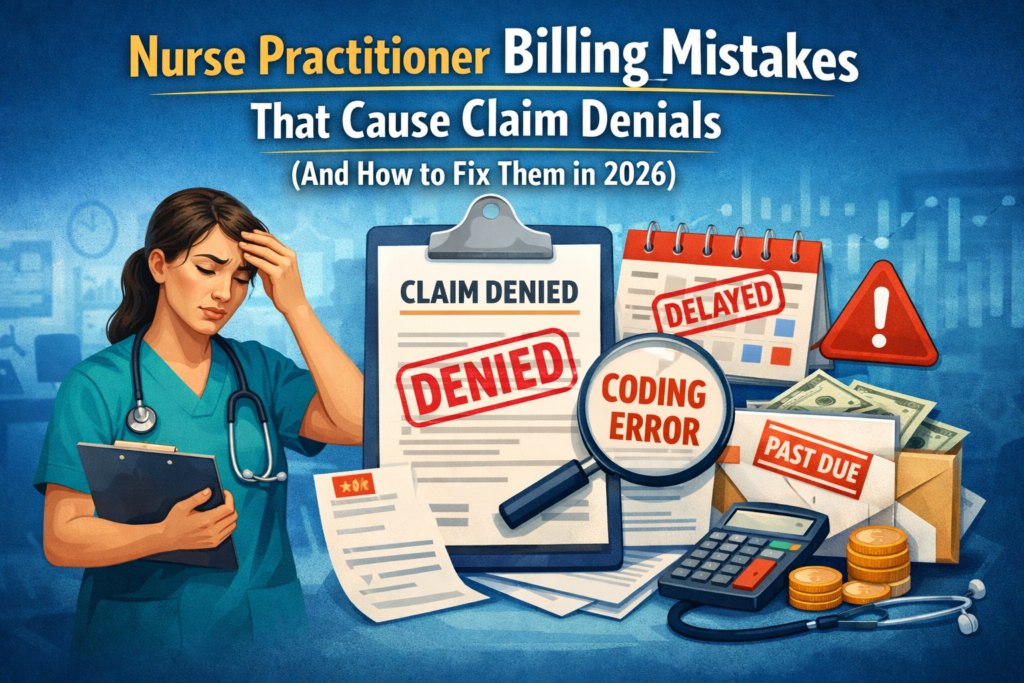
Nurse practitioners (NPs) and clinic owners face numerous challenges in managing billing processes efficiently. Among these challenges, claim denials stand out as a significant barrier that leads to revenue loss and administrative burden. Navigating the complexities of billing can be overwhelming, especially with evolving regulations and payer requirements. Understanding and addressing these issues is critical to maintaining a healthy cash flow and ensuring compliance. This blog explores common nurse practitioner billing mistakes that cause claim denials and offers practical solutions to fix them in 2026. Leveraging expert nurse practitioner billing services can be a game-changer for your practice’s financial health.
Why NP Billing Is Complex
Billing for nurse practitioners is inherently complex due to several factors:
Regulatory Variations
Federal and state regulations differ widely regarding NP billing. Medicare, Medicaid, and private insurers each have distinct rules about billing practices, reimbursement rates, and provider recognition, making it difficult to standardize billing procedures.
Scope of Practice Differences
NPs’ scope of practice varies by state, influencing what services they can bill independently. Some states allow full practice authority, while others require physician supervision or collaboration, complicating billing eligibility and documentation.
Incident-to Billing Confusion
Incident-to billing allows services provided by NPs to be billed under a physician’s NPI for higher reimbursement. However, strict criteria must be met, including physician presence and supervision requirements. Misunderstanding these rules often leads to improper billing and claim denials.
Credentialing Issues
Proper credentialing with payers is essential but often overlooked. Without accurate provider enrollment and credentialing, claims may be rejected or denied, causing delays and lost revenue.
Common NP Billing Mistakes
Many nurse practitioner clinics encounter similar errors that lead to claim denials:
Incorrect Provider Billing (NPI Issues)
Using the wrong National Provider Identifier (NPI) or billing under an uncredentialed provider is a frequent mistake. This error results in claim rejection because payers cannot verify the service provider’s eligibility.
Wrong Use of Incident-to Billing
Improper application of incident-to billing, such as billing under a physician’s NPI without meeting supervision requirements, triggers denials. Clinics may also bill incident-to services when the NP should bill independently, causing compliance issues.
Missing Documentation
Incomplete or insufficient documentation fails to support the billed service level. Missing progress notes, treatment plans, or supervision records are common reasons payers deny claims.
Eligibility Verification Problems
Failing to verify patient insurance eligibility before service delivery leads to claim denials. Services rendered to patients with inactive or non-covered plans often go unpaid.
Impact on Clinics
These billing mistakes have tangible negative impacts:
Denials and Rejections
Claims denied due to billing errors increase administrative workload and reduce timely revenue inflows.
Delayed Payments
Even when claims are eventually approved, errors cause payment delays that strain clinic cash flow and budgeting.
Compliance Risks
Incorrect billing practices expose clinics to audits, penalties, and potential legal liabilities, threatening long-term viability.
How to Fix NP Billing Issues
Addressing these challenges requires a multifaceted approach:
Proper Credentialing
Ensure all NPs and supervising physicians are correctly enrolled and credentialed with every payer. Regularly update credentialing information to avoid lapses.
Accurate Coding
Use current CPT and HCPCS codes that reflect the NP’s scope of practice and services rendered. Avoid miscoding by staying informed about payer-specific billing guidelines.
Documentation Practices
Maintain thorough and compliant documentation that justifies the billed services. Include detailed progress notes, treatment plans, and evidence of supervision when applicable.
Regular Audits
Conduct periodic internal audits to identify and correct billing errors proactively. Audits help maintain compliance and improve claim acceptance rates.
Benefits of Professional NP Billing Services
Outsourcing billing to specialized nurse practitioner billing services offers several advantages:
Reduced Denials
Expert billing teams understand payer requirements and avoid common pitfalls, significantly lowering denial rates.
Faster Reimbursements
Efficient claim submission and follow-up processes accelerate payment cycles, improving cash flow.
Better Compliance
Professional services ensure adherence to regulatory and payer rules, minimizing audit risks and penalties.
Partnering with nurse practitioner billing services allows clinics to focus on patient care while maximizing revenue and maintaining compliance.
Conclusion
Nurse practitioner billing mistakes are a major cause of claim denials and revenue loss for clinics. By understanding the complexities of NP billing and implementing best practices in credentialing, coding, documentation, and audits, clinics can reduce errors and improve financial performance. Leveraging professional nurse practitioner billing services further enhances efficiency and compliance.
Struggling with nurse practitioner billing errors? Contact our team today for a free billing audit and improve your collections.
Would you like help optimizing your billing processes or understanding payer-specific requirements next?